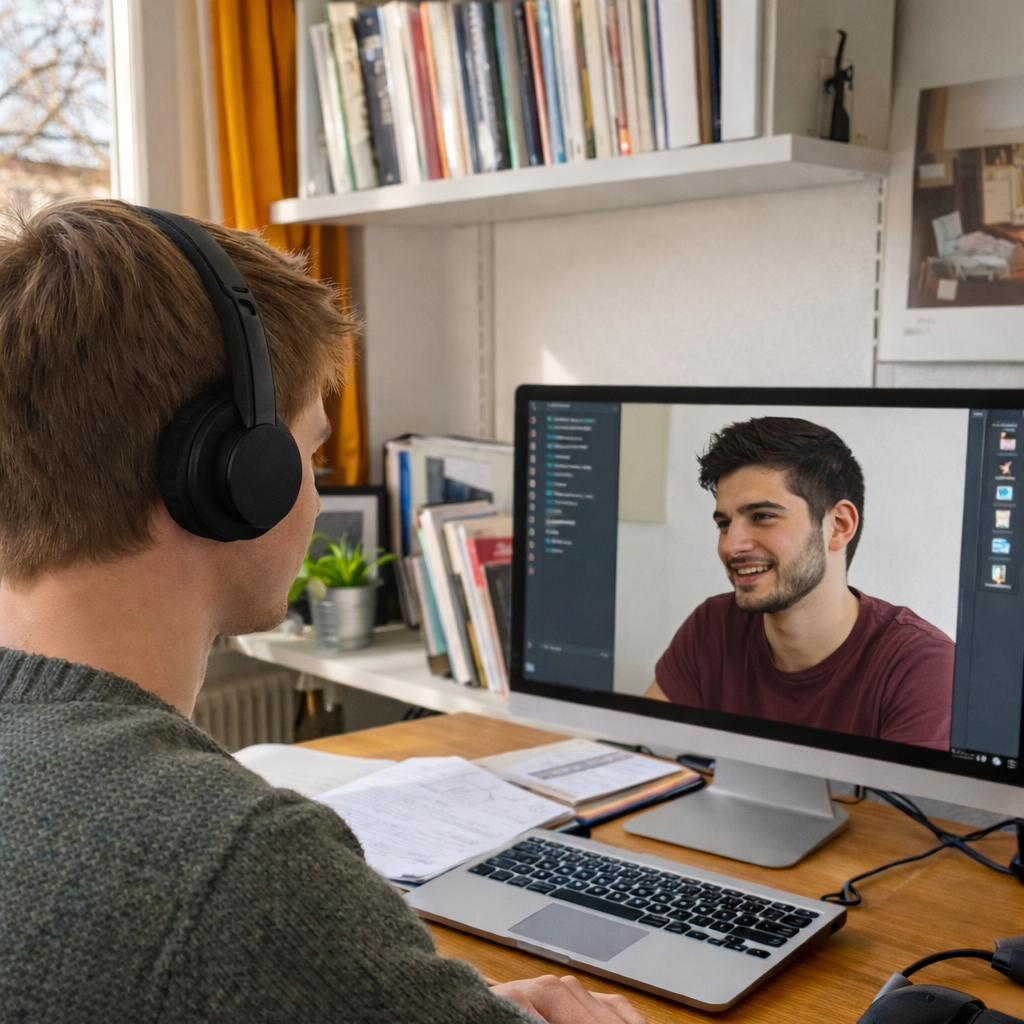

One of the most common questions parents ask is whether online tutoring or in-person tutoring options are better for their child.
The truth is that both could work, but each approach comes with different advantages and tradeoffs. This article explores these advantages and tradeoffs to help you determine which option may be the best fit for your family.
What Is online tutoring vs In-Person tutoring?
Online tutoring takes place through video conferencing platforms such as Zoom or Microsoft Teams. Students and tutors interact in real time using video, screen sharing, and digital whiteboards.
In-person tutoring, on the other hand, occurs in a physical location. This may involve a tutor coming to your home or your child attending a tutoring center.
Online Tutoring: Benefits and Tradeoffs
(+) Benefits
- Greater convenience and efficiency
Online tutoring removes the need to commute (whether for students or tutors). In cities such as Dubai or Riyadh, traffic alone can significantly increase the time required for each tutoring session – e.g., a one-hour lesson can easily turn into a two-hour commitment when travel is included.
With online tutoring, students can simply log in from home and begin the session immediately. - Better tutors
One of the biggest advantages of online tutoring is access to a global pool of educators. Instead of being limited to tutors within your local area, your child can learn from some of the best and most experienced teachers from around the world (e.g., US, EU, Asia, etc.). - More flexibility in scheduling
Because tutors and students can be located in different time zones, online tutoring offers far greater scheduling flexibility. Students can often find potential sessions available in the mornings, after school, evenings, and on weekends. - Safe and controlled environment
Learning from home on a computer can also provide a comfortable and controlled environment for students. Parents know exactly where their child is during the session, what they are doing, and there is no need for travel to and from tutoring centers.
(-) Tradeoffs
- Ensuring focus (especially for younger students)
The main tradeoff with online tutoring is ensuring focus and engagement in students. Because students are on their laptops, it is easier for them to stop paying attention, check their phones, or use AI / ChatGPT to get answers.
The best way top tutors manage this is to teach in a Socratic way – engaging with students through back-and-forth questions and answers to ensure students are engaged and can reason verbally through their work.
Still, we have found that younger students – particularly those in grade 3 and below – focus better in a physical learning environment that allows tutors to better guide attention, redirect focus, and maintain engagement. - Technical issues
Online tutoring depends on technology and a good connection, which means that if either party (the tutor or student) is connected from a place without a stable internet connection, it can impact the lesson quality.
These disruptions are rare but can be minimized with a stable internet connection, a backup device such as a tablet or phone, and reliable video conferencing platforms.
In-Person Tutoring: Benefits and Tradeoffs
(+) Benefits
- Stronger personal connection
Face-to-face interaction can sometimes make it easier for students to build a personal connection with their tutor, as is the case with most interactions. Body language, eye contact, and physical presence can help create a learning environment that feels more natural for some students. For children who thrive on interpersonal interaction, this can be valuable. - Easier to ensure focus
In-person tutoring can make it easier for tutors to ensure students stay engaged during the lesson. Without a computer screen in front of them, students may be less tempted to switch tabs, check messages, or become distracted by other online content. For students who may struggle with focus, an in-person option might be a better fit. - Limited technology barriers
In-person tutoring removes the possibility of internet issues or technical disruptions. Lessons rely on traditional tools such as pen, paper, textbooks, and whiteboards, which can be appealing to some students.
(-) Tradeoffs
- Less efficient
In-person tutoring often requires some time to settle in before learning begins. Students may need to arrive, unpack materials, and transition between sessions. While this is typically minor, online tutoring often allows for a quicker start to focused instruction. - Less convenient
Travel is one of the biggest drawbacks of in-person tutoring – either for the tutor or student. Parents may need to drive their child to a tutoring center, or coordinate schedules for a tutor to visit the home. This added logistics can make it more difficult to fit tutoring into already busy weekly schedules. - Limited access to tutor talent
When tutoring is restricted to a specific geographic area, the pool of available tutors becomes smaller. Families may have fewer options when searching for a tutor with the right expertise, experience, and teaching style. Online tutoring, by contrast, opens access to educators from around the world. - Less scheduling flexibility
In-person tutoring schedules are typically more limited because both the tutor and student must be available in the same location at the same time. This can make it harder to find convenient session times that work for your child’s needs.
So which option is best for your child?
Both online tutoring and in-person tutoring can be highly effective. The best choice usually depends on multiple factors such as your child’s age, learning style, and schedule.
However, as a general rule of thumb, we typically recommend the following to our families
Online tutoring tends to be a better option if your child is in middle school or high school, cares most about finding the best possible tutor, potentially has a busy schedule (e.g., multiple after school activities), and is comfortable using basic technology (e.g., Zoom, tablet, digital pen).
In-person tutoring, on the other hand, tends to work better for younger students (grade 3 and below) and in cases where students may have more focus issues and require someone to sit down with them in person to keep them focused and without distractions.
While these are general rules of thumb, each child is unique and there is no one-size-fits-all approach to learning. Speak to an experienced educator or specialist who can evaluate your child’s needs and recommend the right approach for you.