
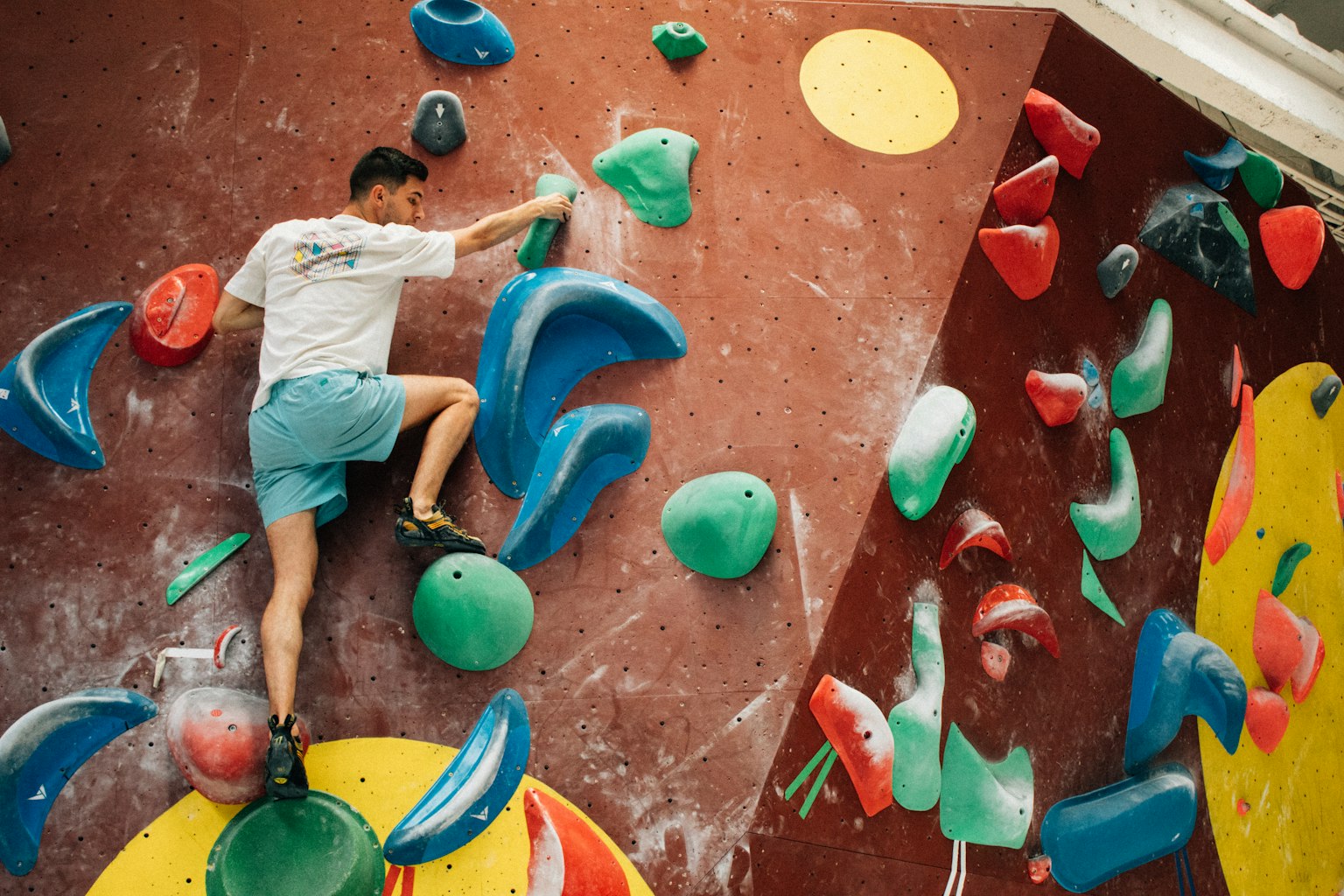
I recently took up rock climbing. Twice a week I take the short walk to my local climbing gym, and for around an hour and a half I lose count of the number of times gravity gets the better of me. The crash mats are, thankfully, quite soft.
For the days that follow each session, sore fingers are a lingering reminder of the sheer effort it took to (mostly) fall. Despite all this, I'm noticeably improving at the sport and have developed a real love for it. I owe all my improvement to being consistent and refusing to stop, even when it feels impossible.
Learning sometimes feels a lot like rock climbing. When we learn, we have to work against the pull of staying as we are and avoiding the strain that effort brings. The process is never smooth and it can be incredibly bruising, but people who go on to achieve great things are usually consistent, determined and a little stubborn. The psychologist Angela Duckworth uses the word "grit" for this: "passion and perseverance for long-term goals".
What remains curious to me is that, in my experience, the more I commit to a goal (and so the more effort I put in), the more I feel inclined to try even harder. Grit starts to feel satisfying in itself, once it becomes part of who we are.
It was true for me, as much as anyone, that grit didn't come naturally. After showing some musical talent, I started learning the drums aged 7 and improved quickly at first. The excitement of playing on my teacher's top-of-the-range drum kit, combined with lots of positive feedback, kept me motivated as I tapped and bashed through those first couple of years at a carefree rhythm. Once I reached a certain level, the next step required more deliberate practice. I remember my teacher telling me I would have to spend "an hour or so per day" at the kit practising drills. Bravado coupled with insecurity led me to shrug off his advice. Instead, I told myself that a few 10-minute sessions a week would be fine.
A quarter of a century later, I haven't played the drums in nearly 15 years. Looking back, I wish someone had helped me realise that the drills weren't the main thing I had to learn. Had my teacher deliberately emphasised the importance of learning to persevere, I'm sure he would have helped me reach much more of my potential.
In a world where exceptional talent and clever "hacks" often get more attention, students who learn grit can stand out from their peers and give themselves a better chance of success. Angela Duckworth even has a formula for it.
First, we develop a skill by applying effort to our natural talents:
Talent × effort = skill
Then, to turn that skill into a meaningful achievement, we have to apply effort to the skill:
Skill × effort = achievement
Put the first equation into the second and you get:
Achievement = talent × effort²
Effort counts twice.
As a science teacher, I find this formula enormously appealing: a neat demonstration of the sometimes unglamorous but important work of building grit. For students who want to fly high, a consistent structure is essential. Combined with the support of educators who deliberately encourage grit as a goal in itself, they are far more likely to reach goals that once seemed out of reach.
All this makes me think I could even take up the drums again, assuming my fingers aren't too sore from all the rock climbing.
If you're interested in how we can help your child build consistent habits, get in touch with our team.